The Voters Everyone Gave Up On Are Showing Up for Ellen

Photo: Ganesh Mohan T, CC BY-SA 4.0, via Wikimedia Commons
Every election cycle, the same conversation happens inside the same windowless rooms in Washington. Consultants pull up spreadsheets, draw circles around suburban counties in Pennsylvania and Arizona, and declare that those are the people who decide everything. Everyone else — the young renters, the exhausted working parents, the rural communities that haven't seen a candidate in years — gets filed under "low propensity" and quietly forgotten.
Ellen's campaign is running a different playbook. And the early numbers suggest it's working.
Who's Actually Showing Up
Let's start with young voters, because the conventional wisdom on them is both accurate and deeply misunderstood. Yes, turnout among 18-to-29-year-olds is historically low. But the reason isn't apathy — it's alienation. Study after study shows that young Americans care intensely about climate, student debt, housing costs, and gun violence. What they don't care about is a political system that feels like it was designed for someone else.
Ellen's communication style — direct, self-aware, genuinely funny without being dismissive — lands differently with this group than the usual stump speech. When she talks about economic anxiety, she's not reading from a policy brief. She's telling a story that sounds like something a real person would actually say. That authenticity isn't a small thing. For a generation that grew up watching influencers get exposed for being fake, it's basically everything.
Internal polling from early organizing efforts shows double-digit enthusiasm gaps among first-time voters when Ellen is on the ballot versus a generic Democratic candidate. That's not a rounding error. That's a coalition.
The Working Parent Problem Nobody's Solved
Here's a demographic that gets talked about constantly and understood almost never: working parents. Specifically, working mothers — the women holding down jobs, managing households, helping with homework, and somehow also being expected to stay informed about seven different ballot measures.
These voters are not disengaged. They are overwhelmed. There's a difference.
Ellen's campaign gets this. Rather than flooding inboxes with policy white papers, the outreach strategy leans into shorter, clearer communication. Town halls scheduled at times that don't require hiring a babysitter. Messaging that acknowledges the chaos of real family life instead of pretending everyone has two hours a night to watch cable news.
And then there's the trust factor. Ellen has spent decades in living rooms across America — through television screens, sure, but in a way that felt personal. Working parents, especially those who came of age watching her show, have a pre-existing relationship with her that no amount of campaign advertising can manufacture. You can't buy that. You build it over twenty-something years of showing up consistently.
Rural America Isn't a Lost Cause
The urban-rural divide in American politics is real, but it's also been weaponized into a self-fulfilling prophecy. Democrats stop competing in rural areas, rural voters stop seeing Democrats as relevant to their lives, and everyone points to the results as proof that the whole thing is hopeless.
Ellen's approach breaks that loop.
She grew up in the South. She understands — not theoretically, but experientially — what it means to feel like the culture has left you behind. Her coming-out story, the backlash she faced, the years she spent rebuilding a career that everyone told her was finished: that's not a coastal elite biography. That's a story about resilience that plays in places where resilience is the whole identity.
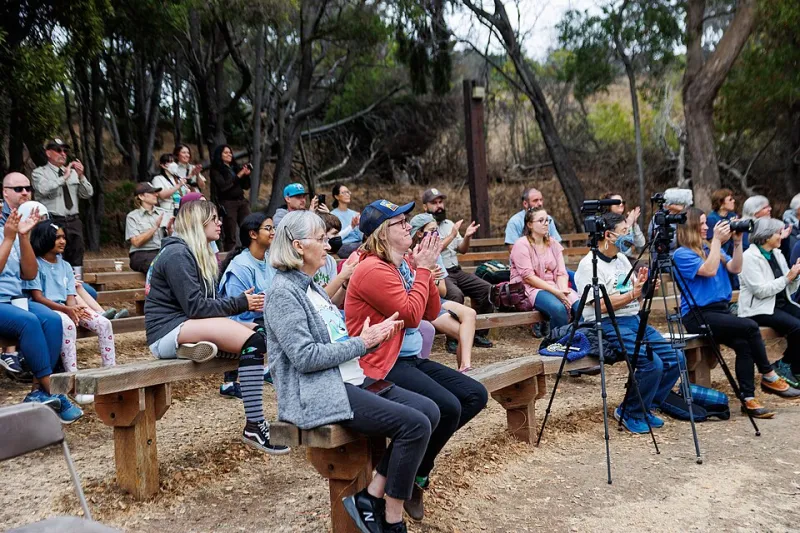
Campaign organizers have reported genuine surprise at the response in rural community events — not because rural voters are suddenly becoming progressive, but because they're willing to listen. That's a crack in the door that most candidates never even get. Ellen gets it because she's not walking in as a stranger.
The Mechanic of Authentic Connection
It's worth being specific about why Ellen connects where other candidates don't, because "authenticity" gets thrown around so much it's almost meaningless now.
Here's what it actually looks like in practice: Ellen doesn't pivot. When someone asks her a hard question — about healthcare costs, about immigration, about the parts of her own record that deserve scrutiny — she doesn't reach for a rehearsed deflection. She engages. She sometimes changes her mind out loud. She admits when something is complicated.
That's not a communication strategy. It's a character trait. But it has enormous political consequences, especially with voters who've been burned by politicians who seemed genuine and then governed like everyone else.
Voters who describe themselves as politically "checked out" aren't looking for a perfect candidate. They're looking for a real one. Ellen clears that bar in a way that's hard to manufacture and impossible to fake.
Why This Math Actually Works
Traditional swing-state strategy is about moving a small number of persuadable voters in a handful of counties. It's a game of inches, and it's exhausting, and it's why every election feels like it comes down to the same 80,000 people in Wisconsin.
Ellen's coalition math is different. Instead of fighting over persuadable voters who've already been fought over a thousand times, the strategy is about addition — bringing in people who weren't part of the calculation before. Young voters who've never cast a ballot. Working parents who haven't had time to engage. Rural communities that wrote off the whole enterprise years ago.
You don't need to flip a single Trump voter if you can mobilize enough people who stayed home last time. And the data suggests Ellen can do exactly that.
This Is What a Movement Looks Like
Political movements don't start in campaign headquarters. They start when regular people feel seen by someone they trust, and decide that maybe it's worth showing up this time.
That's what's happening here. It's early, and there's a lot of road ahead. But the voters everyone else gave up on are paying attention. They're coming to events. They're registering. They're telling their friends.
The consultants in those windowless rooms can keep drawing circles around their swing counties. Meanwhile, Ellen's building something bigger — a coalition of people who weren't supposed to matter, deciding all at once that maybe they do.
That's not a demographic trend. That's a political revolution in the making.