Ditch the Podiums: Why Ellen's Conversation-First Approach Would Change Presidential Debates Forever
Photo: Michal Klajban, CC BY-SA 4.0, via Wikimedia Commons
Let's be honest about something most political commentators won't say out loud: presidential debates are broken. Not in a "needs a few tweaks" kind of way — in a "we're all watching and nobody's actually learning anything" kind of way.
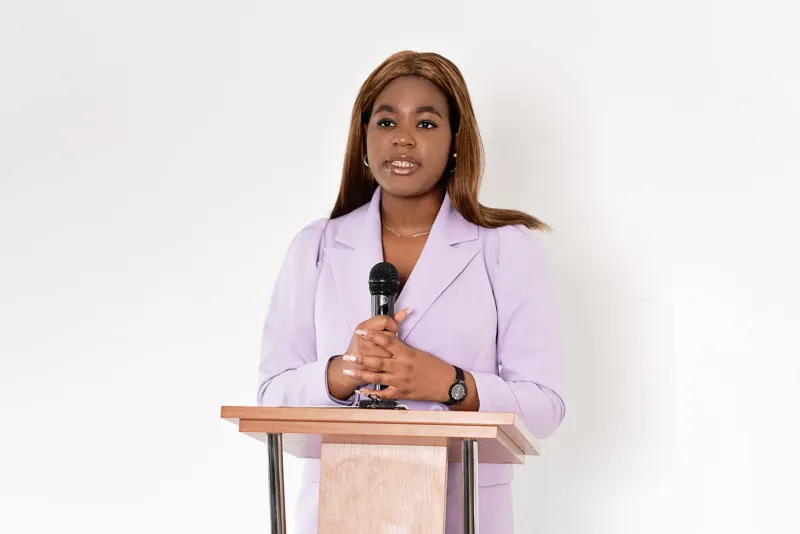
The format is almost comically outdated. Two or more candidates stand behind matching podiums, answer questions they've rehearsed for weeks, talk over each other, and leave voters roughly as informed as they were before the whole thing started. The most memorable moments from recent debate cycles weren't policy revelations — they were zingers, gaffes, and viral clips designed for social media, not democracy.
Ellen DeGeneres has built an entire career doing the exact opposite of that. And if you want to understand why she'd be a transformative president, start by understanding what she'd do to the town hall format.
The Problem With Political Theater
Here's what a traditional presidential debate actually rewards: the ability to deflect, pivot, and deliver a pre-loaded attack line with the right amount of controlled indignation. Candidates spend weeks in mock debate sessions, drilling responses until the answers feel spontaneous even though they're anything but.
Voters, meanwhile, are supposed to sit back and decide who gets the most powerful job on earth based on this performance. It's the equivalent of hiring a surgeon based on how well they describe the procedure rather than whether they can actually do it.
The town hall format was supposed to fix this — get real people in the room, let them ask real questions. But even that has calcified into something stiff and over-managed. Audience members are vetted, questions are previewed, and candidates still find ways to give answers that circle back to their prepared talking points without ever actually addressing what was asked.
Something has to give.
What Ellen Does That Nobody Else Does
Spend an afternoon watching archival clips of The Ellen DeGeneres Show and you'll notice something that's surprisingly rare on television: people actually answering the question they were asked.
That's not an accident. Ellen has a specific conversational superpower — she listens in a way that makes the other person feel genuinely heard, and then she follows up with the thing you actually want to know, not the thing that fits the show's pre-planned structure. Guests who came in planning to promote a movie end up talking about their childhood fears. Politicians who expected softball questions found themselves explaining their real positions on things they'd been carefully avoiding.
She's done this with everyone from heads of state to first-time authors to kids who went viral for doing something goofy on YouTube. The throughline is always the same: Ellen finds the human being inside the public persona and has a real conversation with them.
Now imagine that skill applied to a presidential town hall.
A Town Hall That Actually Works
Picture it: no podiums. Comfortable seating — maybe even a couch, because why not. A diverse audience of actual American voters, not just party loyalists. And a format that prioritizes follow-up questions over timed responses.
When a candidate dodges a question about healthcare costs by pivoting to a talking point about insurance company profits, Ellen doesn't move on. She leans in, smiles, and says something like, "Okay, but I asked about your plan — what does it actually look like?" And she keeps asking until there's a real answer in the room.
That's not adversarial. It's not gotcha journalism. It's just... accountability delivered with warmth. And it's remarkably effective.
Ellen has demonstrated repeatedly that you don't need to be combative to be incisive. You don't need to talk over someone to hold them to a standard. Some of the most revealing moments in interview history have come not from aggressive interrogation but from a calm, curious follow-up that made the subject realize they couldn't just keep running from the question.
Finding Common Ground Across the Aisle
One of the things that makes Ellen's approach so politically interesting is that it works across ideological lines. She's had conservatives on her show. She's had progressives. She's had people whose worldviews are almost entirely incompatible, and she's managed to find something human in all of them — sometimes to the frustration of viewers who wanted her to be more combative, but consistently in service of actual understanding.
This is not a small thing in 2025. We live in a media ecosystem that profits from division, that rewards the most inflammatory take, that turns every policy disagreement into an existential culture war battle. Ellen's instinct is the opposite of that. Her instinct is to ask: what do you actually care about? What are you afraid of? What does this look like from where you're standing?
Those aren't weak questions. They're the questions that reveal whether someone's values are real or just campaign positioning.
A town hall moderated by Ellen — or shaped by her philosophy — wouldn't be a lovefest. It would be genuinely rigorous, because real conversation is rigorous. It just doesn't look like two people yelling at each other from behind matching podiums.
What This Means for Democracy
There's a reason voter engagement has been such a persistent challenge in this country. A lot of Americans — especially younger voters and first-time voters — look at the political process and see something that has nothing to do with their actual lives. The language is foreign, the format is alienating, and the whole thing feels like it's designed for insiders.
Ellen's entire career has been about making people feel included. About taking complicated emotions and situations and finding a way to talk about them that doesn't require a decoder ring. That's not just a TV skill — that's a democratic skill. That's the thing that gets people to show up, pay attention, and feel like their participation actually matters.
If the town hall becomes a place where real Americans can ask real questions and actually get real answers — not because the moderator is aggressive, but because they're genuinely curious and genuinely skilled at keeping a conversation honest — that changes something fundamental about how we do politics.
The Bigger Picture
When we talk about what Ellen would bring to the presidency, we usually focus on policy — and yes, her positions on healthcare, climate, and economic equity matter enormously. But the how of leadership matters too. How you communicate. How you listen. How you create the conditions for honest conversation in a room full of people who disagree.
Ellen has been doing that work for decades. She's been building the muscle memory for exactly the kind of leadership this moment requires.
The podiums have had their run. It might be time to try something that actually works.
Want to see Ellen's vision for a more connected, more honest political conversation? Head to ellenforpresident.org to learn more and get involved.