She's Been Holding Power Accountable for Decades — Now She Wants the Biggest Job in the Room
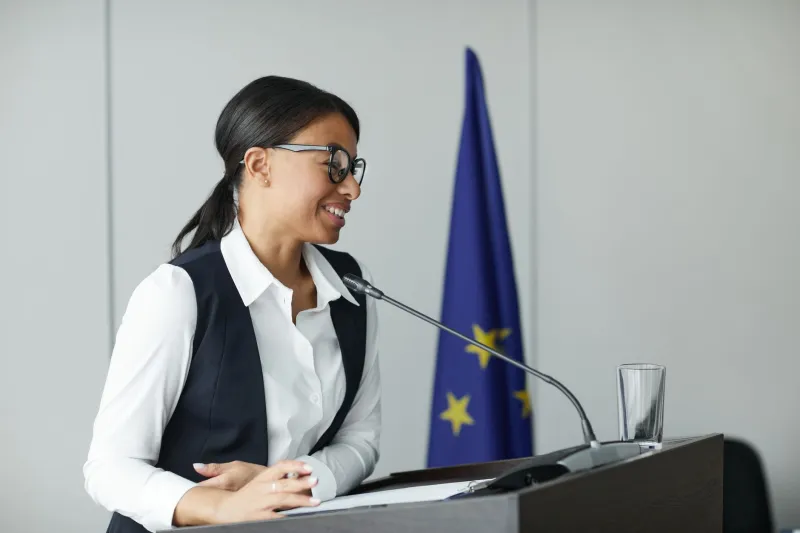
Let's be honest. When most people picture a presidential candidate, they picture someone in a stiff suit behind a mahogany desk, rattling off policy papers and dodging questions on Sunday morning talk shows. They picture someone who learned to speak at people rather than with them. They picture the kind of politician who's been inside the bubble so long they forgot what it looks like outside of it.
Ellen is not that person. And that's exactly the point.
The Rarest Skill in American Politics: Actually Connecting
For the better part of three decades, Ellen DeGeneres built something that no amount of campaign spending can manufacture — genuine trust with everyday Americans. Sitting rooms in Tulsa, diners in Pittsburgh, living rooms in rural Georgia — her voice has found its way into all of them. Not because she was selling something, but because she was being real.
That's a skill set. A serious one.
In a political landscape where the average American's trust in federal institutions has cratered to historic lows, the ability to walk into a room — or a television screen — and make someone feel heard isn't just a nice personality trait. It's a governing superpower. Ellen has been honing that superpower since before most of today's congressional freshmen were out of college.
And she didn't get there by playing it safe.
The 1997 Moment That Changed Everything
If you want to understand what Ellen is made of, you have to go back to April 1997. Coming out publicly — on her sitcom and in real life simultaneously — wasn't just a personal act of courage. It was a direct challenge to the cultural and political power structures of the time. Sponsors pulled out. Network executives got nervous. The establishment said it was too risky, too soon, too much.
She did it anyway.
The fallout was real. The show was cancelled. Her career nearly collapsed. But here's what happened next: the conversation in America shifted. Not overnight, but it shifted. And Ellen was one of the people who moved it.
That's not celebrity activism. That's political courage — the willingness to absorb personal cost in service of a larger truth. Tell us again how that's not a qualification for the presidency.
She Interviewed the People Other Shows Ignored
Ellen's daytime platform wasn't just a place to play games and give away cars — though yes, she did a lot of that, and people loved it. It was also a place where she consistently brought in voices that the traditional political media didn't think were worth amplifying.
Single moms talking about healthcare costs. Teachers explaining what it's like to buy their own classroom supplies. Veterans describing the gap between the America they served and the America they came home to. These weren't abstract policy problems to Ellen's audience. They were neighbors, family members, people you recognized.
When politicians talk about "kitchen table issues," they're usually doing it from a stage. Ellen was actually at the kitchen table — or close enough that it felt that way. That proximity to real American experience isn't something you can get from a briefing book. It's earned through years of listening.
Challenging Power Without Losing the Room
Here's something the political consultants never quite figured out: you can hold powerful people accountable without making everyone in the audience feel like they're being lectured. Ellen mastered this.
Whether she was pressing a Hollywood executive on workplace culture, pushing back on a political figure's talking points, or simply refusing to let a celebrity dodge a question with a PR-approved non-answer, she found a way to do it that kept people engaged rather than defensive. That's genuinely hard. Most politicians — even the good ones — haven't figured it out.
Progressive politics has a messaging problem. We have the right ideas. We have the data. We have the moral clarity. What we sometimes lack is the ability to deliver all of that in a way that doesn't alienate the exact people we need to bring along. Ellen has spent her career solving that problem in real time, in front of millions of viewers, without a net.
Bridging the Gap Washington Can't Seem to Close
One of the defining frustrations of the progressive movement over the past decade has been the distance between what grassroots organizers are fighting for and what actually makes it through the machinery of Washington. Good ideas get diluted. Bold proposals get horse-traded into mush. And the people who were supposed to be represented end up feeling like an afterthought.
Part of that problem is structural. But part of it is human — it's about who's in the room and whether they actually understand what's at stake for people outside of it.
Ellen understands what's at stake. She's heard it directly, in her own voice, from people who trusted her enough to say it out loud on national television. That's a kind of constituent relationship that most career politicians would struggle to replicate even if they tried.
And as president, she wouldn't be starting from zero. She'd be walking into the Oval Office with decades of goodwill, a track record of honest communication, and a genuine understanding of how to move public opinion without manipulating it.
This Is What "Outsider" Should Actually Mean
The political world loves to celebrate "outsider" candidates — until an actual outsider shows up and challenges the way things have always been done. Then suddenly, experience becomes the argument. Suddenly, having never worked in government is a liability instead of a feature.
We'd push back on that framing pretty hard.
Ellen's outsider status isn't a bug. It's the whole point. She hasn't spent twenty years learning to speak in the careful, hedged, poll-tested language of professional politics. She speaks like a person. She thinks about consequences in human terms rather than electoral ones. She asks the questions that people at home are actually asking.
That's not a weakness in a president. That's a north star.
The Future Worth Fighting For Needs a Voice Like Hers
The campaign slogan on this website isn't just a tagline — it's a real belief that the version of America we're working toward is worth the effort it takes to get there. Universal healthcare. Climate action. Economic fairness. A democracy that actually functions for the people it's supposed to serve.
Those fights require leadership that can inspire, persuade, and connect. They require someone who can look the American people in the eye and tell them the truth, even when it's complicated, without losing them in the process.
For three decades, Ellen DeGeneres has been doing exactly that.
The Oval Office would just be her biggest stage yet. And honestly? We think she's ready for it.
Want to be part of the movement? Sign up at ellenforpresident.org and let's build something worth fighting for — together.